Best Hamster Bedding UK: Safe, Dust-Free Substrates Reviewed
The best hamster bedding is a 99% dust-free paper-based substrate that absorbs moisture quickly, controls odour and holds its shape for burrowing. Hamsters spend their entire lives on and under this m

Best Hamster Bedding UK: Safe, Dust-Free Substrates Reviewed
The best hamster bedding is a 99% dust-free paper-based substrate that absorbs moisture quickly, controls odour and holds its shape for burrowing. Hamsters spend their entire lives on and under this material, so a dusty or scented pine shavings bag can trigger respiratory illness and skin irritation in days. Our overall pick is the BUCATSTATE Hamster Bedding 70L at £25.49 — a large-volume, dye-free white paper substrate that absorbs several times its own weight in liquid without clumping into a soggy mat.
Key Takeaways
- Paper-based bedding is the safest default — it's virtually dust-free, absorbs well and won't irritate a hamster's sensitive airways the way pine or cedar shavings can.
- Hamsters are natural burrowers, so a substrate needs depth (at least 15–20cm packed in) and enough structure to hold tunnels without collapsing.
- Bulk 70L and 101L bags work out far cheaper per litre than small 15L packs if you keep more than one enclosure or change out frequently.
- Dyed and scented bedding looks appealing but is best avoided for hamsters with allergies, respiratory issues or sensitive skin.
- Spot-clean daily and do a full change every 1–2 weeks to keep ammonia levels down and prevent wet-tail and respiratory infections.
Comparison: Best Hamster Bedding
| Product | Type | Price | Best For | Check Price |
|---|---|---|---|---|
 BUCATSTATE Hamster Bedding 70L (White) BUCATSTATE Hamster Bedding 70L (White) |
Paper substrate, 70L | £25.49 | Best overall | Check Price |
 Flintronic 99% Dust-Free Paper Small Pet Bedding, 15L Flintronic 99% Dust-Free Paper Small Pet Bedding, 15L |
Paper substrate, 15L | £8.99 | Best budget pick | Check Price |
 BUCATSTATE Hamster Bedding 101L (Pink) BUCATSTATE Hamster Bedding 101L (Pink) |
Paper substrate, 101L bulk | £35.99 | Best bulk value | Check Price |
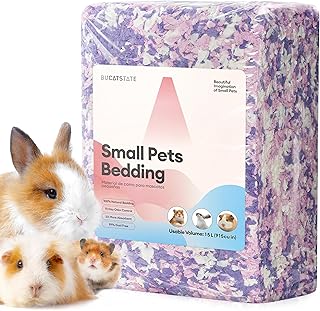 BUCATSTATE Hamster Bedding 15L (Lavender) BUCATSTATE Hamster Bedding 15L (Lavender) |
Paper substrate, 15L scented | £9.34 | Best small cage / starter pack | Check Price |
 Dihl 70 Litre Super Absorbent Paper Bedding Dihl 70 Litre Super Absorbent Paper Bedding |
Paper substrate, 70L | £22.99 | Best for multi-pet households | Check Price |
Detailed Reviews
BUCATSTATE Hamster Bedding 70L, 99% Dust-Free and Odor Control Guinea Pig Bedding, Natural Paper Rabbit Bedding for Cages Rat Syrian Dwarf Hamster Hedgehog (White)

The BUCATSTATE 70L in natural white is the substrate we'd reach for first in almost any enclosure. It's made from recycled paper that's been fluffed up into soft, springy strips, and the 99% dust-free claim holds up in practice — there's no visible dust cloud when you pour it from the bag, which is the single most important thing to look for in hamster bedding. The natural white colour also means no hidden dyes or fragrances, making it a safe choice for hamsters with sensitive skin or a history of respiratory trouble.
The real selling point is volume. A 70-litre bag is enough to fill a large bin cage or a 100cm tank with the 15–20cm depth hamsters need to construct proper tunnels, with plenty left over for several top-ups. Odour control is solid rather than spectacular — you'll still want to spot-clean the toilet corner every day — but it absorbs urine quickly and dries to a light crust rather than turning into a damp, smelly mat. At £25.49 it sits in the middle of the pack on price, but the cost per litre works out excellent for the quantity.
Price: £25.49 | Volume: 70L | Material: 99% dust-free recycled paper | Colour: Natural white
Check the latest price on Amazon UK →
Flintronic 99% Dust-Free Paper Small Pet Bedding with Odor Control, 15L, Hamster Bedding, Small Animal Beddings, Paper Beddings for Rat, Syrian Dwarf, Rabbit, Hamster Hedgehog

If you only need to line a single standard cage or you're trying hamster ownership for the first time, the Flintronic 15L bag is the most economical way to get hold of proper paper bedding. At £8.99 it undercuts the branded alternatives while still delivering the same core promise — shredded paper that's been processed to remove virtually all dust and treated for odour control. The texture is soft and pliable, which makes it easy to fluff up and pack into a deep layer.
The obvious compromise is volume. Fifteen litres is enough for one or two full changes of a small-to-medium cage, so if you've invested in a large enclosure you'll be buying another bag sooner than you'd like. It's also slightly less springy than the BUCATSTATE substrate, so ambitious tunnel structures tend to sag after a night's burrowing. That said, for a single hamster in a standard cage, or as a "try before you bulk-buy" option, the Flintronic is hard to fault at this price.
Price: £8.99 | Volume: 15L | Material: 99% dust-free paper | Suitable for: Hamsters, rats, rabbits, hedgehogs
Check the latest price on Amazon UK →
BUCATSTATE Hamster Bedding 101L, 99% Dust-Free Guinea Pig Bedding Odor Control Paper Bedding, Cozy Small Animal Bedding Bulk for Rabbit Rat Syrian Dwarf Hamsters Gerbils (Pink)

For multi-cage households, breeders or anyone running a deep-substrate naturalistic setup, the BUCATSTATE 101L bulk bag is the standout value choice. Worked out per litre, this is comfortably the cheapest option in the line-up despite the higher headline price, and one bag will comfortably fill a large hamster enclosure several times over — or several smaller cages at once. The same 99% dust-free paper formulation and odour-control treatment as the 70L bag carries across, so you're not compromising on quality to save money.
The pink colouring is the one feature worth a moment's thought. BUCATSTATE uses pet-safe dyes, but coloured bedding is generally best avoided for hamsters that already have respiratory sensitivities or a tendency to chew their substrate. If your hamster is healthy and you'd like a brighter-looking cage, the pink is cheerful and photographs well; if in doubt, the undyed 70L white is the safer call. Either way, as a bulk buy for keepers who change bedding often, the 101L is genuinely hard to beat.
Price: £35.99 | Volume: 101L bulk | Material: 99% dust-free paper | Colour: Pink (pet-safe dye)
Check the latest price on Amazon UK →
BUCATSTATE Hamster Bedding 15L, 99% Dust-Free Guinea Pig Paper Bedding Odor Control Paper Bedding, Cozy Small Animal Bedding for Rabbit Rat Syrian Dwarf Hamsters Gerbils (Lavender)
The lavender 15L bag is BUCATSTATE's small-format option, aimed squarely at owners with a single cage or a first hamster. The paper is the same dust-free, odour-controlled formulation as the larger bags, just in a manageable size that's easy to store and pour — handy if you're tight on cupboard space or you want to top up an existing substrate rather than do a full change. The soft lilac colour is a mild, pet-safe tint that gives the cage a fresher look than plain white.
As with the 101L pink bag, the lavender dye is the trade-off to weigh up. It's marketed as safe, but some owners prefer to avoid any added colouring on principle, particularly with hamsters prone to allergies. On price, the 15L format means the cost per litre is higher than the bulk options, so if you know you'll be keeping hamsters long-term it makes more sense to step up to the 70L. For a first-time owner or a small enclosure, though, the lavender 15L is a sensible, low-commitment starting point.
Price: £9.34 | Volume: 15L | Material: 99% dust-free paper | Colour: Lavender (pet-safe dye)
Check the latest price on Amazon UK →
Dihl 70 Litre, White, Super Absorbent Paper Bedding for Small Animals. Absorbs 6 Times its Weight in Liquid. Hamster, Mice, Rat, Rabbit, Guinea Pig Gerbil Cage Substrate – 70L

The Dihl 70L is the option to consider if absorbency is your top priority — the manufacturer claims it soaks up six times its own weight in liquid, and in practice it does a noticeably good job of keeping the cage floor dry even with a hamster that favours one damp corner. That makes it especially useful in multi-pet households where you might be cleaning out several small animal enclosures on the same schedule, as the substrate stays fresher for longer between full changes.
The white, undyed paper is a safe choice for hamsters with sensitive airways, and the 70-litre volume matches the BUCATSTATE for value. Texture-wise it's slightly more compacted straight out of the bag, so you'll want to fluff it thoroughly before laying it down — but once loosened it holds burrows reasonably well. At £22.99 it's the cheapest 70L option here, making it an excellent pick if you run through bedding quickly or you're kitting out more than one cage.
Price: £22.99 | Volume: 70L | Absorbency: Up to 6× its weight | Colour: Natural white
Check the latest price on Amazon UK →
How to Choose Hamster Bedding
Bedding isn't just a floor covering — for a burrowing animal like a hamster, it's the most important part of the cage. Get it wrong and you risk respiratory disease, skin sores and stress behaviours; get it right and your hamster will dig, nest and forage naturally. Here's how to choose well.
Pick paper over wood shavings. Paper-based substrates are the modern default for good reason. They're virtually dust-free, they absorb urine rather than letting it pool, and they don't release the volatile oils that pine and cedar shavings give off — those oils are genuinely harmful to a hamster's respiratory tract over time. All five products in this roundup are paper-based.
Check the dust content. A dusty bedding is the fastest route to a respiratory infection. Hold a handful up and give it a shake — you shouldn't see a cloud. "99% dust-free" on the label is a good benchmark; anything that doesn't state it should be treated with caution. This matters most for dwarf hamsters, whose tiny airways clog more easily.
Give them depth to burrow. Hamsters are tunnelling animals, and a thin scattering of substrate denies them their most natural behaviour. Aim for at least 15–20cm packed across the floor of the enclosure, deeper if your cage allows. Bulk bags (70L and up) make this affordable; small 15L bags will struggle to fill a properly sized cage more than once.
Think about colour and scent carefully. Dyed bedding looks cheerful and the dyes used by reputable brands are pet-safe, but if your hamster has allergies, a history of respiratory issues or a habit of chewing the substrate, undyed natural white is the safer choice. Avoid any bedding with added perfume or essential oils — these irritate hamsters far more than they mask odour.
Factor in the cost per litre. A 15L bag at £9 looks cheaper than a 101L bag at £36, but per litre the bulk option is roughly a third of the price. If you'll be keeping hamsters for the long term, or you have more than one cage, buy the largest bag you can store.
Clean on a sensible routine. Spot-clean the toilet corner daily — hamsters usually pick one spot, which makes this quick — and do a partial substrate change weekly with a full clean every 1–2 weeks. Ammonia builds up fast in a small enclosure, and damp bedding is a leading cause of wet-tail and respiratory infections.
Frequently Asked Questions
What is the safest bedding for a hamster?
The safest bedding is a 99% dust-free paper substrate with no added fragrance or essential oils. Paper bedding absorbs moisture well, holds tunnels for burrowing and doesn't release the harmful volatile oils found in pine and cedar shavings. All five products in this roundup meet that brief. Avoid sawdust, scented shavings and any substrate that produces a visible dust cloud when shaken.
Can I use pine or cedar shavings for my hamster?
No. Pine and cedar shavings release phenols and volatile oils that irritate a hamster's respiratory tract and liver over time, and they've been linked to respiratory disease and shortened lifespans. Kiln-dried aspen shavings are the only wood-based option generally considered safe, but even then, a dust-free paper substrate is the better default for most owners.
How deep should hamster bedding be?
Aim for a minimum depth of 15–20cm across the cage floor, and deeper if your enclosure allows. Hamsters are natural burrowers that construct elaborate tunnel systems in the wild, and a shallow layer denies them this behaviour. A deep substrate also absorbs more urine and needs changing less often. Bulk bags like the 70L and 101L options make a deep fill affordable.
How often should I change hamster bedding?
Spot-clean the toilet corner daily — most hamsters pick one spot to relieve themselves, so this is quick. Do a partial change (around half the substrate) once a week, and a full clean every 1–2 weeks. Cleaning too often can stress a hamster by removing their scent, so keep a small handful of old bedding when you do a full change to keep the enclosure smelling familiar.
Is coloured hamster bedding safe?
Bedding from reputable brands uses pet-safe dyes, so coloured options like the BUCATSTATE pink and lavender bags are generally considered safe for healthy hamsters. However, if your hamster has respiratory sensitivities, skin allergies or a habit of chewing the substrate, undyed natural white bedding is the more cautious choice. Avoid any bedding with added perfume or essential oils entirely.
How much bedding do I need for my cage?
It depends on cage size and desired depth. A standard 80cm cage filled to 15cm needs roughly 20–30L of substrate for a single full change, while a large 100cm-plus tank can easily take 50L or more. As a rule, buy the largest bag you can store — bulk 70L and 101L bags work out far cheaper per litre than 15L packs and spare you running out mid-clean.